

 Κυριακή, Ιουλίου 14, 2013
14 Ιουλίου,
1789 – Επίθεση κατα της Βαστίλης, σύμβολο της τυραννίας, της
φεουδαρχικής εξουσίας και των “ελέω Θεού” δικαιωμάτων των βασιλέων. Η αρχή της Γαλλικής Επανάστασης. Η επανάσταση ενθουσίαζει όχι μόνο τους Γάλλους μα και και την εργατική τάξη όλου του κόσμου.
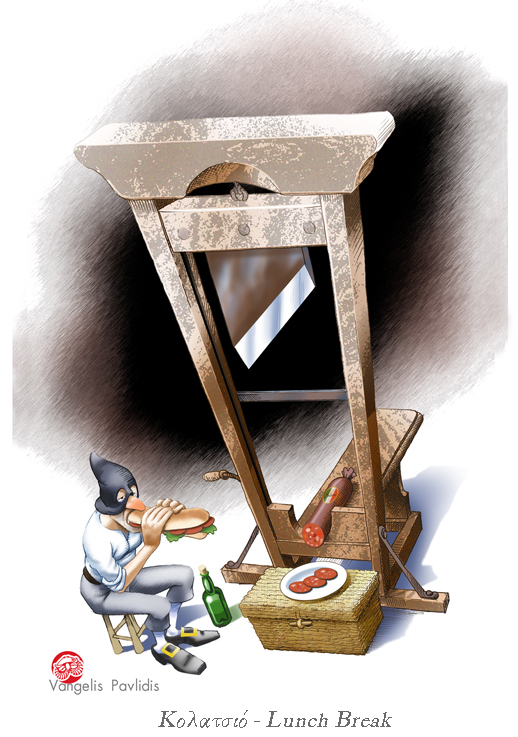
Η τελική επικράτηση της μεσαίας τάξης θα οδηγήσει στην γκιλοτίνα και το καλάθι της, τον αυταρχισμό, την Αυτοκρατορία και διάφορους καταχτητικούς πολέμους.
Η τελική επικράτηση της μεσαίας τάξης θα οδηγήσει στην γκιλοτίνα και το καλάθι της, τον αυταρχισμό, την Αυτοκρατορία και διάφορους καταχτητικούς πολέμους.
…”Το
κίνημα της 31 Μάη, 1793, έδωσε τη δυνατότητα στην Επανάσταση να
συμπληρώσει τη δουλειά που αποδείχτηκε και το κύριο επίτευγμά της: την τελική κατάργηση, χωρίς αποζημίωση, των φεουδαρχικών προνομίων και την κατάργηση του Μοναρχικού δεσποτισμού.
Μα όταν έγινε αυτό, η Επανάσταση τράβηξε φρένο. Η πλειοψηφία του λαού ήθελα να πάει παραπέρα, αλλά αυτοί που το πλημμυρίδα της Επανάστασης έφερε επι κεφαλής του κινήματος, δεν τόλμησαν να προχωρήσουν. Δεν επιθυμούσαν να βάλει η Επανάσταση χέρι στον πλούτο της μεσαίας τάξης, όπως είχε κάνει με τους ευγενείς και τον κλήρο, κι έβαλαν τα δυνατά τους να καθοδηγήσουν, να σταματήσουν και τελικά να συντρίψουν το κίνημα που ξεκινούσε προς την κατεύθυνση αυτή….
… με τη σειρά τους έγιναν κι αυτοί “πολιτικοί” και βάλθηκαν να χτίσουν μια δυνατή κεντρική κυβέρνηση, της οποίας τα συστατικά μέρη θα τους υπακούν τυφλά. Πέτυχαν να ορθώσουν την εξουσία αυτή πάνω στα πτώματα εκείνων που θεωρήθηκαν πολύ προχωρημένοι, μα όταν κι αυτοί ανέβηκαν με τη σειρά τους στο ικρίωμα συνειδητοποίησαν πως ταυτόχρονα με την καταστροφή της εμπροσθοφυλακής είχαν σκοτώσει και την Επανάσταση”….
Πρίγκιψ Πέτρος Αλεξέιεβιτς Κροπότκιν, Η Μεγάλη Γαλλική Επανάσταση, 1789-1793Μα όταν έγινε αυτό, η Επανάσταση τράβηξε φρένο. Η πλειοψηφία του λαού ήθελα να πάει παραπέρα, αλλά αυτοί που το πλημμυρίδα της Επανάστασης έφερε επι κεφαλής του κινήματος, δεν τόλμησαν να προχωρήσουν. Δεν επιθυμούσαν να βάλει η Επανάσταση χέρι στον πλούτο της μεσαίας τάξης, όπως είχε κάνει με τους ευγενείς και τον κλήρο, κι έβαλαν τα δυνατά τους να καθοδηγήσουν, να σταματήσουν και τελικά να συντρίψουν το κίνημα που ξεκινούσε προς την κατεύθυνση αυτή….
… με τη σειρά τους έγιναν κι αυτοί “πολιτικοί” και βάλθηκαν να χτίσουν μια δυνατή κεντρική κυβέρνηση, της οποίας τα συστατικά μέρη θα τους υπακούν τυφλά. Πέτυχαν να ορθώσουν την εξουσία αυτή πάνω στα πτώματα εκείνων που θεωρήθηκαν πολύ προχωρημένοι, μα όταν κι αυτοί ανέβηκαν με τη σειρά τους στο ικρίωμα συνειδητοποίησαν πως ταυτόχρονα με την καταστροφή της εμπροσθοφυλακής είχαν σκοτώσει και την Επανάσταση”….
July 14, 1789 – Storming of the Bastille, symbol of tyranny, feudal authority and the “divine” rights of kings, heralds the French Revolution. The revolution creates a formidable enthusiasm not only among the French working classes but also around the world.
Eventually, the middle-class gains control, its power displayed in the basket of the guillotine and the totalitarian temptation, leading to reaction, Empire and various wars of conquest.
…
“The movement of May 31, 1793, had made it possible for the Revolution
to complete the work which proved to be its principal achievement: the
final abolition, without redemption, of feudal rights, and the abolition
of royal despotism. But, this done, the Revolution was coming to a
standstill. The mass of the people were willing to go further; but those
whom the tide of Revolution had carried to the head of the movement
dared not advance. They did not wish the Revolution to lay hands on the
wealth of the middle classes, as it had that of the nobility and clergy,
and they strained all their power to moderate, to arrest, and
eventually to crush the movement that was beginning in this direction….
In their turn they became “statesmen,” and laboured to build up a strong
centralised government, whose component parts should obey them blindly.
They succeeded in erecting this power over the corpses of those whom
they had found too advanced, but they realised, when they themselves
mounted the scaffold, that in destroying the advanced party, they had
killed the Revolution…”
Prince Pyotr Alexeyevich Kropotkin, The Great French Revolution, 1789-1793
Από http://pavlidiscartoons.com/blog/
14 JULY 2013
 Ετικέτες:


